
Last Updated on February 9, 2024 by Dr. Ashley Söderlund
Inside: Discipline your toddler or young child without shame and instead help them build the skills they will use their whole life from within. One phrase you should always use with your toddler when disciplining. A phrase that empowers rather than shames.
The original meaning of the word discipline comes from the Latin “disciplina,” meaning “teaching, learning” and is related to the word disciple. To discipline is to teach — that is our role as parents, even as we are still learning ourselves.
When disciplining our children, we want to empower them to change their behavior, not shame or try to control them. We want our children to build up self-regulation skills within themselves, not conform to set rules or behave out of fear.

Your child will naturally outgrow many “problem” behaviors as their brain grows and they gain more self-regulation. (Read more about the amazing brain development in the toddler years here).
In the meantime, it is important to help your children develop a healthy relationship with their emotions and that mistakes are learning opportunities, not something to feel shame about. Our goal is to teach our children how to behave in social situations so they can form deep and meaningful relationships with others throughout their lives.
Growth Mindset and Empowerment For Toddlers
Children live in the here and now, and young children, in particular, think in a “fixed” mindset, meaning that they don’t naturally assume things can or will change.
We have to teach them that they can change their behavior and that they can grow.
For example, when children realize they have done something wrong, they feel failure, and to them, it feels permanent — a permanent mistake.
How can we help our kids move from a feeling of failure and shame to a feeling of empowerment to learn and grow?
5 Steps for Using Positive Discipline with Toddlers: Shift from Shame to Empowerment
When your child does something you want them to do differently, follow these steps:
- Acknowledge the feeling or impulse while setting a boundary: “It is okay to have big feelings and I won’t let you use your hands to show your big feelings.”
- Allow the Expression of Emotion: Children may react emotionally to having their goals blocked. Accept those big emotions, and reinforce the first step. “It is okay to feel frustration, I will keep you and your friend safe, I won’t let you push.”
- Comfort and soothe: If they are in the midst of big emotions, your goal is to help their nervous system calm down and not act like emotions are a threat.
- Once Calm, Problem Solve: How can you both play with the toy?
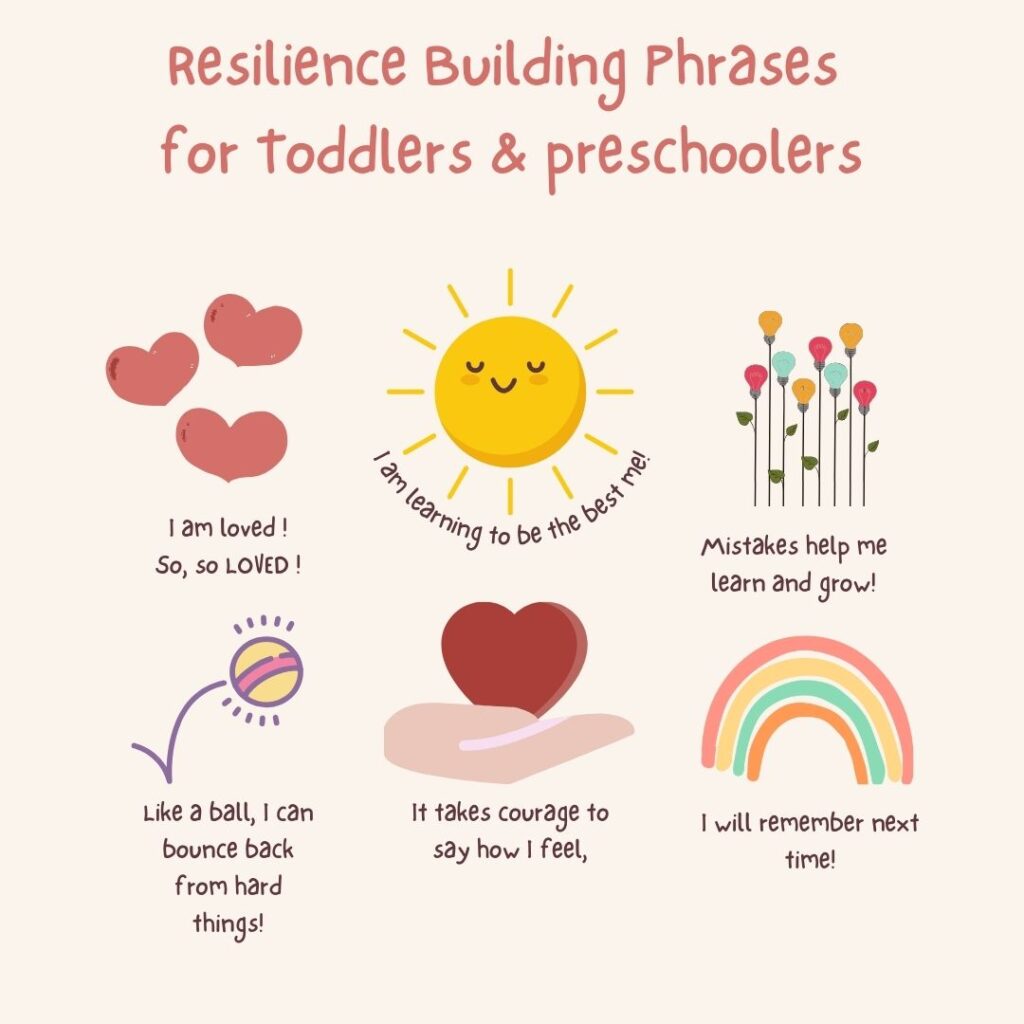
- Empower, Don’t Shame: Once children calm down feelings of shame can set it. They know they’ve made a mistake and had big emotions and if you are just beginning to work on accepting emotions, this can be especially true. Help them feel empowered by saying always saying this phrase, “You’ll remember next time.”
Read more –> 3-Step Guide for Positive Parenting Toddlers and Kids
Read More –> How to Hold Space for Your Child’s Emotions and Impulses
Why it Works: Shifting Focus to the Positive
Following these steps empower children to change their behavior instead of shaming them. Acknowledging emotions, problem-solving, and encouraging them that they will remember next time lets your child know that their failure today isn’t a permanent failure and that they can change.
It also helps them resolve their current feelings (I feel bad now, but next time I can do better) and gives them a sense of relief and a desire to try next time. This harnesses a growth mindset instead of a fixed mindset. It empowers them as opposed to shaming them.
If they do remember next time, they might even point it out to you “I remembered Mama! I used my words!” with their eyes shining with pride. And you’ll respond with a “Yes, you did remember! You used your words!” just as excited as they are.
When they do that, you’ll know it happened — they were empowered to change their behavior from within. The shift to the positive worked, along with learning opportunities (without mistakes, they wouldn’t learn) and brain maturity.
And it’s okay if they don’t remember. The phrase still works because sometimes they will remember — and there is always the next time. This helps shift the focus from the times they’ve made a mistake (which really is brain immaturity and learning opportunities) and to focus on the times they do remember. See the graphic below for more resilience building phrases for toddlers!
What to do next…
1. Get advice from Dr. Ashley Soderlund sent right to your inbox. ❤︎
When you sign up you will get Dr. Ashley’s 5-part Mindful Parent Quick Win Series. These quick wins are designed to get you started implementing some strategies that are rooted in love and backed by science.
After that, you will receive emails when Dr. Ashley has new resources and seasonal series like back-to-school mental health, and holiday gratitude series.
2. Emotional and mental wellness begins at home.
Get the tools you need in my shop! Digital printables you can instantly download and print to foster connection, emotion regulation, and more! Check out the Nurture and Thrive Shop.
Related:
How to Discipline Your Toddler: A Three-Step, Easy to Remember Strategy (that works!!!)
The Secret to Your Two-Year-Old’s Heart (and gaining their cooperation!)

 How To Help Your Kid Wake Up Happy
Thanks. This was very helpful.
Thank You Sheere!
Hi there
Lovely site!
Thanks so much!stay blessed n inspired!
We appreciate u!
I love this – it really got me thinking! I have so many “go to” phrases, but have never thought of using this one. I can tell this phrase will be one that becomes another favorite. 🙂 I think that it would mean a lot to my boys to hear this sometimes, and I can definitely see how it would change their behavior in the future. Sharing this on my Facebook! 🙂
Hi Jenn,
I’m always looking for more go to phrases too, I’m glad you like this one. Thank you for sharing on your Facebook page!
I like this! It was really helpful! A phrase we use most is “Were you thinking?”. Not in a belittling way. But, as a family, we talk a lot about thinking before we react or act; instead of plowing forward, letting our feelings guide us. Many times, our kids catch themselves before making a mistake. Or, it helps them realize their mistake and seems to encourage them to understand the pain/problem that their action caused, rather than them being prideful about a consequence.
I like that — especially in the way that you use it. In the Whole-Brain Child book they talk about using your upstairs brain or your downstairs brain. It is the same idea of stopping and thinking before acting. What you are also teaching you children when you use that phrase is self-regulation. The ability to control impulses. I am going to use this with my son– thank you for sharing!
thank you.
You’re welcome Galeema!
Thank you for sharing. Sure wish I could have done this when mine was little…he needs help with impulse control now as a teenager! Do you think this would work for a teenager? We are looking to change several behaviors and bad choices that our son is regularly making…without much success. I feel all we do anymore is constantly punish him with little or no positive results. My go to phrase is I give two choices…then say “you choose which you would rather do/have happen” and in that moment he usually chooses the correct one but our issue we are having are the choices he makes when we are not with him. Any advice is appreciated at this point! Thank you.
Great question. I haven’t gotten to the teenage years yet myself and I also specialized in younger children in my research. However, I do know this: Research shows that 11-year-olds actually have better judgement than 15-year-olds because of the changes the brain is going through at this age. The brain is reorganizing and the second biggest growth in executive functioning is happening. During this growth spurt the brain is more disorganized and as a result, you can see more impulsiveness. I like your strategy of giving him two choices — you are illustrating good decision-making skills. I also think educating your son about the development his brain is going through can help– learning to make good choices is a natural part of his development right now. Harvard has some great resources and also executive function exercises for kids based on age: http://developingchild.harvard.edu/resources/activities-guide-enhancing-and-practicing-executive-function-skills-with-children-from-infancy-to-adolescence/. I also think positive discipline works at any age and while I don’t have specific strategies off the top of my head for teens, I recommend this book: http://amzn.to/1LiDNZ3
Thank you so much for your input. It is good to hear some reasons behind his impulsiveness. I have heard that the male brain doesn’t fully develop until they’re 25. Yikes!!! ? If this is true we have a long road ahead of us, but are in it for the duration!! I will definitely be checking out the link and book you have shared with me. Thank you so much for taking the time to let me know!! 🙂
Thanks Amy! Glad to help! (:
This worked for me when I taught my daughter to say excuse me instead of just rudely interrupting. She gets so proud of herself when I acknowledge her now that she forgets what she even wanted. She says “see mommy that was polite right”!
That’s awesome Misty! I’m so glad to hear it worked for you.
That is a great link to move the child forward. I will try it tomorrow….. if ‘I’ remember!
My almost 4-year-old, Ruby, has been engaging in negative self talk, always following a negative consequence (natural consequence or otherwise). Today, she made a series of poor choices at the grocery. Once it the car, she started crying, verbalize that she was upset by her choices, upset with herself etc. This is usually where the negative self talk will begin. (“Why do I do this? When will I learn! I ruin everything!” But with intense emotion.) I looked my girl in the eye and told her, “I know you’re upset now, but next time you’ll remember.” The impact was immediate! Her mouth turned upward so very slightly as her eyes studied mine deciding g whether or not she believed me. Her whole body noticeably relaxed a little and she said, “ok.” And we moved on. It was beautiful.
Melinda,
That is beautiful! Thank you so much for sharing. It worked so well for my son at that age and I’m so glad to see it working for others. This makes my heart happy!
Such a good phrase to remind them that it isn’t permanent or the end of the world!
We always say, “Momma/Daddy disciplines you to help guide your heart. I love you.”
It helps remind them (and us!) that we aren’t disciplining out of anger or just to do it; we’re disciplining to reach their heart.
I love that Kassi. It is — discipline is about helping them problem solve not to control them or change them. Just to guide them and “guide their heart.” I love that because it speaks to the idea that emotion regulation in kids isn’t mature yet. Their young hearts need our loving guidance. <3
Wow what a powerful phrase. I think even adults could use this reminder. (Even if it reminding ourselves…not to yell… Ok I’ll to remember next time. And to model this for our kids too. ) my kids like to point out when I do things that make them upset or when I am not being consistent. “Ouch mom when you yell it hurts my ears. Please stop yelling mama.” “Oh I am sorry honey, you’re right I shouldn’t tell. I feel frustrated sometimes and I yell. I will try and remember next time not to yell. What kinds of things help you be less frustrated when you are yelling? ” my kids have said they like to count, or take a break, or deep breathe. And encourage me to do that. I don’t want my kids parenting me and that isn’t the point, but I do like to show them that I am not perfect and that even mama slips up but that we all even grown ups can try to get better and improve.
Hi Kris,
Thank you! You make some great points. We have been working on temper in our house and the other day my five-year-old said, I think you need to take a deep breath and count to four (which is what I had been saying to him) and it worked! I talk a little bit about how to repair after yelling in this post too: https://nurtureandthriveblog.com/five-steps-to-becoming-a-calm-and-centered-parent/
Thanks for taking the time to leave a comment!